How often does your business bid for work you’re unlikely to win? Is it ever guilty of ‘ego’ bids – driven by personal pride and competitiveness rather than strategic information and logic? Have you experienced the sinking realisation that your business has won the wrong work, with the wrong client, at the wrong price?
If any of this sounds familiar, then it’s time to take a long, hard look at your bid selectivity.
SEVEN STEPS TO SUCCESSFUL SELECTIVITY
Here, distilled from my 40 years’ experience working on strategic bids and frameworks, are my seven simple steps to success when it comes to bidding for the right business.
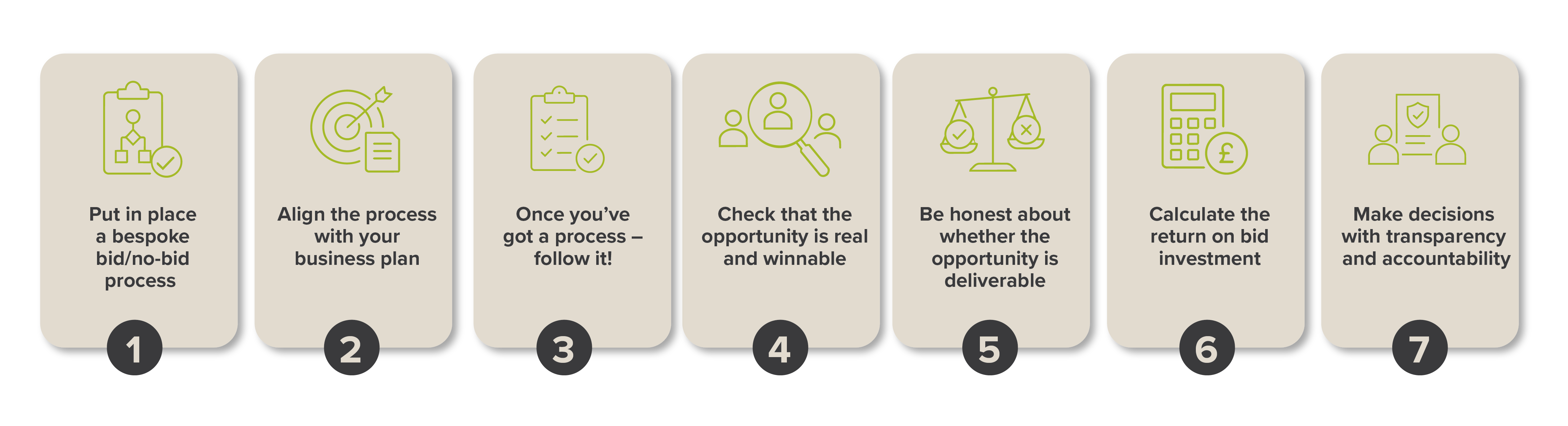
1. Put in place a bespoke bid/no-bid process
Make sure that a bid/no-bid process tailored for your business is built into your work-winning procedures. This will instantly reduce the emotional element of decision-making in relation to bids. There isn’t a one-size-fits-all answer when it comes to bid selectivity – the right approach for you will depend on your specific business, its markets and organisational structure, aims and objectives, and lessons learnt from past successes and failures.
2. Align the process with your business plan
Embed criteria from your business plan – such as new business aspirations and targeted geographies, sectors and markets – within your bid/no-bid process. This will help to ensure you prioritise the right new business opportunities.
3. Once you’ve got a process – follow it!
I’ve sat in countless bid launches where the bid sponsor didn’t know the incumbent or supplier of choice, couldn’t provide a client insight, and didn’t know who was going to make the award decision (never mind what was important to them!). These were all businesses with a bid/no-bid process in place… Once you’ve established a process, follow it!
4. Check that the opportunity is real and winnable
Will the opportunity proceed to an award decision? Look into funding, viability, statutory/regulatory approvals, and the client’s drivers.
If the opportunity is going to go ahead, can you actually win the work? Research existing relationships, profit and cashflow expectations, your competitors, bid resources, and compelling win strategy/value proposition before committing to bidding.
5. Be honest about whether the opportunity is deliverable
Think about scope and services, geography, delivery resourcing, past performance, and commercial risk profile (red lines). You don’t want to win the wrong work…
6. Calculate the return on bid investment
How much will it cost to bid and what is the projected return? Does the investment add up?
7. Make decisions with transparency and accountability
Ensure your bid/no-bid process is underpinned by aligned governance, with appropriate delegated levels of authority. This is crucial if you want to prevent bids that will waste valuable resources. Ego bids, for example, are far less likely if those responsible for signing off the bid/no-bid recommendation are not directly involved.
BID SELECTIVITY FOR BUSINESS SUCCESS
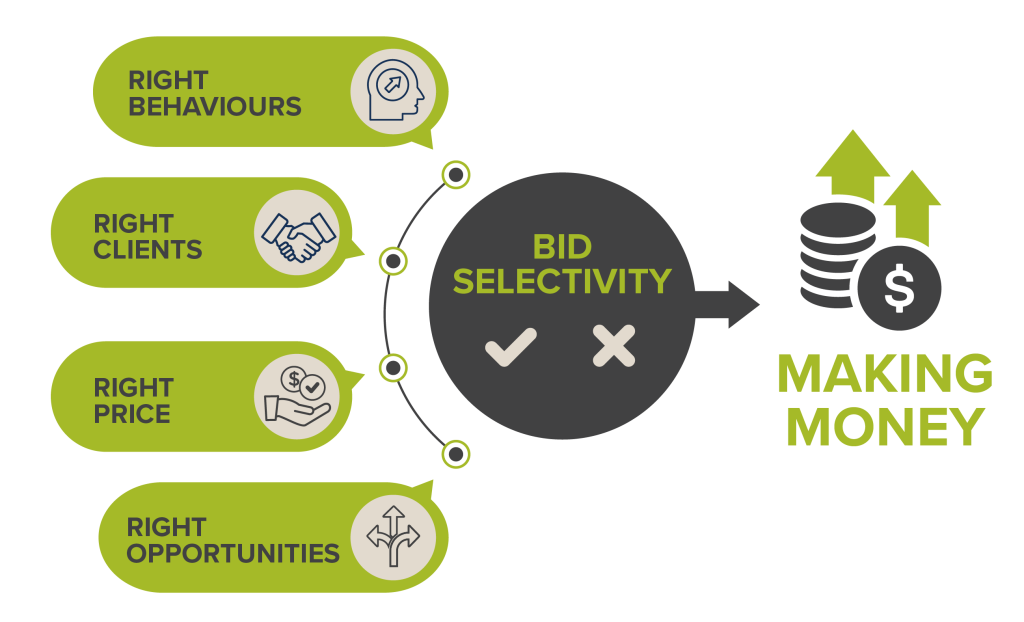
At the end of the day, work-winning is about making money. You need your work-winning teams to be winning the right business, with the right customers, at or above expected business margins, with the right risk profile, and in line with the business plan.
An effective bid selectivity process is key to achieving this.
Businesses that overbid are wasting time and money and putting their people under unnecessary pressure. Their bids are likely to be generic, poor quality and underpriced. Their win rate will be low and profit margins eroded.
If this sounds familiar, it might be time to shift your work-winning focus to profit rather than revenue. Start bidding more selectively, in an informed, transparent and accountable way. You will maximise your resources, improve the quality of your bids, win more of the right business – and ultimately make more money.
Bridgehead Consultancy helps clients to develop a bid/no-bid process that targets resources, aligns with governance, and supports effective bid selectivity. We can also provide advice and support with fast, effective decision-making in relation to specific opportunities, including calculating the cost of bidding and return on investment.
To find out more, contact Ken Erskine, Managing Director, Bridgehead Consultancy.